

Your shoulder is one of the most mobile and versatile joints in your entire body, allowing you to reach, lift, throw, and carry throughout the day. But with all that flexibility and movement comes vulnerability. Whether you’re reaching for a high shelf, sleeping in an awkward position, or dealing with years of repetitive stress, shoulder pain can develop quickly and significantly impact your daily activities. Here in Miami Lakes, many patients at Optimize Health Chiropractic Center come in wondering why their shoulder hurts and what they can do about it. Understanding the different types of shoulder pain and their underlying causes is the first step toward finding relief and preventing future problems.
What is shoulder pain? Shoulder pain refers to any discomfort, aching, stiffness, or sharp sensation felt in or around the shoulder joint and surrounding structures. It can range from mild irritation to debilitating pain that limits movement and affects your quality of life.
Table of Contents
- Understanding Shoulder Anatomy: Why This Joint Is So Complex
- Common Types of Shoulder Pain
- Everyday Causes: Strains, Overuse, and Poor Posture
- Serious Conditions That Cause Shoulder Pain
- How Chiropractic Care Can Help With Shoulder Pain
- Practical Tips for Protecting Your Shoulders
- When to See a Chiropractor for Shoulder Pain
- Shoulder Pain Comparison Table
- Myths vs. Facts About Shoulder Pain
- Final Thoughts
Understanding Shoulder Anatomy: Why This Joint Is So Complex
Before diving into the types and causes of shoulder pain, it helps to understand what makes this joint so unique. The shoulder is actually made up of several structures working together: the ball-and-socket joint where your upper arm bone (humerus) meets your shoulder blade (scapula), the collarbone (clavicle), and a complex network of muscles, tendons, ligaments, and bursae.
Unlike the hip joint, which is deeply set into the pelvis for stability, the shoulder prioritizes mobility over stability. This design allows for incredible range of motion but also makes the joint more susceptible to injury and dysfunction. The rotator cuff, a group of four muscles and their tendons, works constantly to stabilize the shoulder during movement. When any of these structures become irritated, inflamed, or damaged, pain and dysfunction can result.
The shoulder also relies heavily on proper posture and mechanics from surrounding areas. Your neck, upper back, and even your ribcage position can all influence shoulder function. This interconnection is why chiropractors often look at the entire upper body when addressing shoulder complaints.
Common Types of Shoulder Pain
Shoulder pain doesn’t present the same way for everyone. Understanding the type of pain you’re experiencing can provide important clues about what’s causing it.
Sharp, Stabbing Pain
This type of pain often occurs with specific movements, like reaching overhead or behind your back. Sharp pain typically indicates acute irritation of a tendon, bursa, or joint structure. You might feel it when lifting your arm above shoulder height or when sleeping on the affected side.
Dull, Aching Pain
A persistent, dull ache in the shoulder often suggests chronic overuse, muscle tension, or inflammation that has been building over time. This type of discomfort may worsen throughout the day, especially after repetitive activities or prolonged sitting at a desk. Many patients at Optimize Health Chiropractic Center describe this as a constant background pain that never quite goes away.
Stiffness and Limited Range of Motion
When your shoulder feels frozen or you can’t move it through its full range, you’re dealing with restricted mobility. This can stem from inflammation, adhesions in the joint capsule, or protective muscle guarding. Morning stiffness that improves with movement may indicate arthritis, while stiffness that worsens with activity often points to soft tissue problems.
Radiating Pain
Sometimes shoulder pain doesn’t stay in the shoulder. Pain that travels down your arm, up into your neck, or across your shoulder blade can indicate nerve involvement or referred pain from the cervical spine. This type of pain pattern requires careful evaluation to determine the true source of the problem.
Weakness and Instability
If your shoulder feels weak, like it might give out, or if you notice clicking and popping with movement, you may be dealing with instability or a structural problem. Weakness without pain sometimes indicates nerve impingement, while weakness accompanied by pain often suggests tendon or muscle injury.
Everyday Causes: Strains, Overuse, and Poor Posture
Most shoulder pain doesn’t result from dramatic injuries or serious diseases. Instead, it develops gradually from everyday habits and activities that strain the shoulder structures over time.
Poor Posture and Forward Head Position
In our modern world, we spend countless hours looking down at phones, working at computers, and sitting in positions that round our shoulders forward. This posture, often called forward head posture or upper crossed syndrome, changes the mechanics of the shoulder joint. When your shoulders roll forward and your head juts ahead of your body, the muscles that support proper shoulder movement become imbalanced. Some muscles become overly tight and shortened, while others weaken and lengthen.
Here in Miami Lakes, we see this pattern constantly in office workers, students, and anyone who spends significant time on electronic devices. The result is increased stress on the rotator cuff, altered joint mechanics, and eventually pain that may seem to come out of nowhere.
Repetitive Overhead Activities
Whether you’re painting a ceiling, stocking shelves, playing tennis, or swimming regularly, repetitive overhead movements can lead to shoulder problems. These activities stress the rotator cuff and the bursa, small fluid-filled sacs that cushion the joint. Over time, this repetitive stress can cause inflammation, microtrauma, and eventually chronic pain.
Sleeping Position
Your sleeping position plays a bigger role in shoulder health than most people realize. Sleeping on your side with your arm underneath your pillow or in an awkward position can compress the shoulder joint and reduce circulation to the area. Night after night of this compression can contribute to morning stiffness and pain that gradually becomes more persistent.
Sudden Strain or Overexertion
Sometimes shoulder pain starts after a specific incident: lifting something heavy, catching yourself during a slip, or overdoing it during a workout. These acute strains can affect muscles, tendons, or ligaments. While they may heal on their own with proper care, ignoring the pain and continuing normal activities can turn an acute strain into a chronic problem.
Muscle Imbalances and Weakness
The shoulder depends on balanced strength between multiple muscle groups. When certain muscles become weak, others have to compensate, creating abnormal movement patterns. For example, if your rotator cuff muscles are weak, larger muscles like the deltoid and upper trapezius take over, altering how your shoulder blade moves and potentially leading to impingement problems.
Serious Conditions That Cause Shoulder Pain
While most shoulder pain stems from mechanical issues and everyday strains, some conditions require more comprehensive evaluation and care. Understanding these conditions helps you recognize when professional evaluation is necessary.
Rotator Cuff Tendinopathy and Tears
The rotator cuff is the most commonly injured structure in the shoulder. Tendinopathy refers to irritation and degeneration of the rotator cuff tendons, often developing from repetitive stress over time. In more severe cases, these tendons can partially or completely tear. Symptoms typically include pain with overhead reaching, weakness when lifting the arm, and difficulty sleeping on the affected side. Research indicates that conservative care, including chiropractic treatment and rehabilitation exercises, can be effective for many rotator cuff problems.
Frozen Shoulder (Adhesive Capsulitis)
Frozen shoulder is a condition where the joint capsule becomes thickened and tight, severely restricting movement in all directions. It typically develops in stages, starting with increasing pain and stiffness, progressing to maximum stiffness with less pain, and eventually thawing with gradual improvement. This condition is more common in people between 40 and 60 years old and occurs more frequently in women and individuals with certain systemic conditions like diabetes.
Shoulder Impingement Syndrome
Impingement occurs when the space between the top of your shoulder blade and the rotator cuff narrows, causing the tendons and bursa to get pinched during arm movement. This condition often develops from poor posture, muscle imbalances, or repetitive overhead activities. The hallmark sign is pain when raising your arm between 60 and 120 degrees, sometimes called the painful arc.
Arthritis of the Shoulder
Both osteoarthritis and rheumatoid arthritis can affect the shoulder joint, causing progressive pain, stiffness, and loss of function. Osteoarthritis develops from wear and tear over time, while rheumatoid arthritis is an autoimmune condition that causes inflammation throughout the body. Shoulder arthritis is less common than hip or knee arthritis, but when present, it can significantly impact daily activities.
Bursitis
The bursa is a small, fluid-filled sac that cushions the space between bone and soft tissue. When it becomes inflamed, often from repetitive motion or direct trauma, it causes pain and swelling. Shoulder bursitis and rotator cuff problems often occur together, as the same mechanical issues that irritate the bursa also stress the tendons.
Referred Pain from the Neck
Not all shoulder pain actually originates in the shoulder. Problems in the cervical spine, including disc issues, nerve compression, and joint dysfunction, can refer pain into the shoulder region. This is particularly common with nerve irritation at the C5 or C6 levels of the neck. Chiropractors are trained to differentiate true shoulder problems from cervical spine issues that manifest as shoulder pain.
How Chiropractic Care Can Help With Shoulder Pain
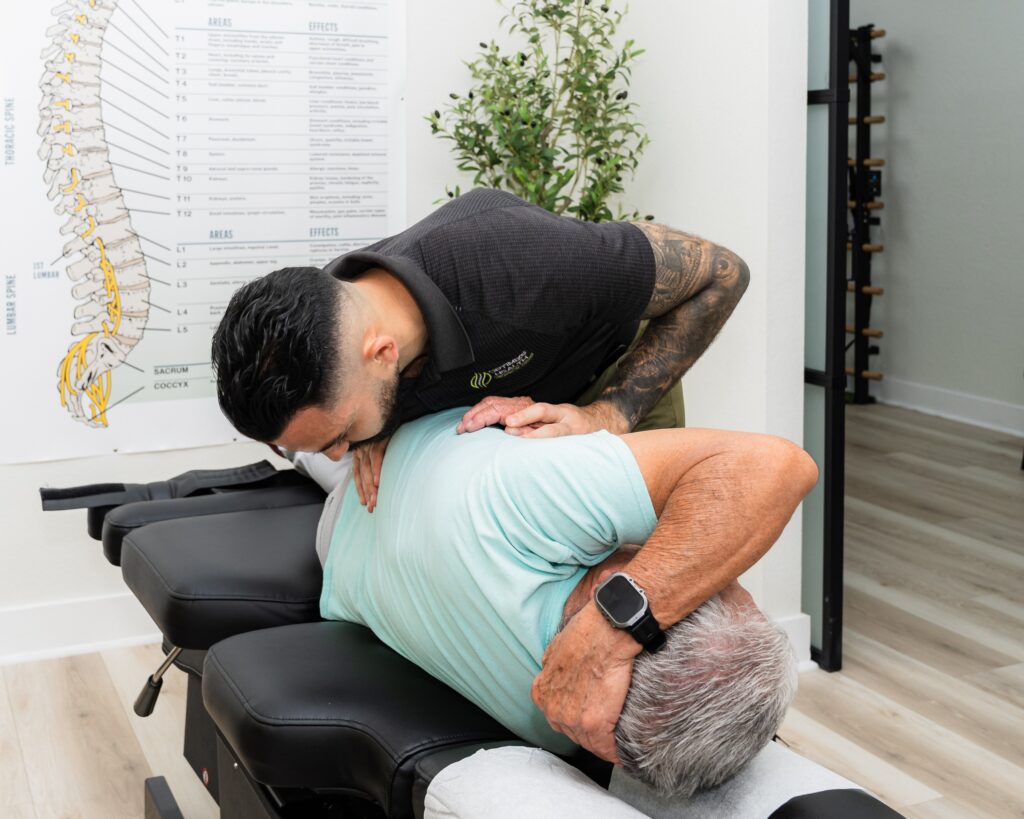
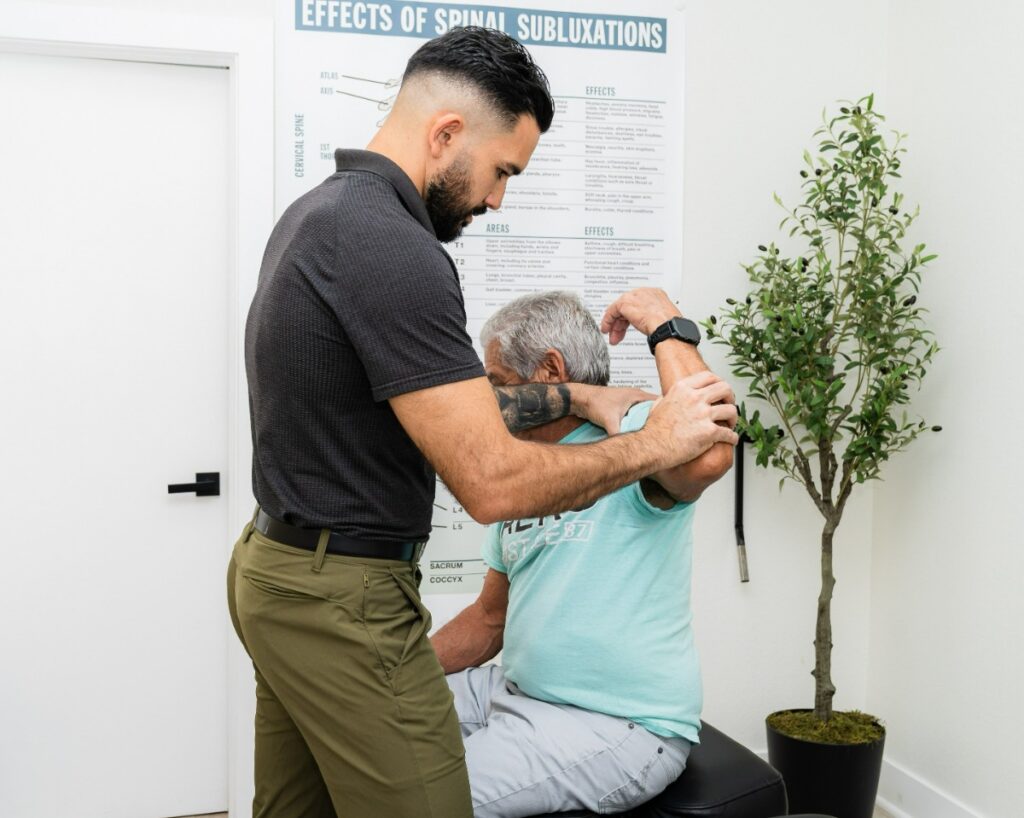
Chiropractic care offers a conservative, non-surgical approach to addressing many types of shoulder pain. At Optimize Health Chiropractic Center, we focus on identifying the underlying mechanical dysfunctions contributing to your pain and restoring proper movement and function.
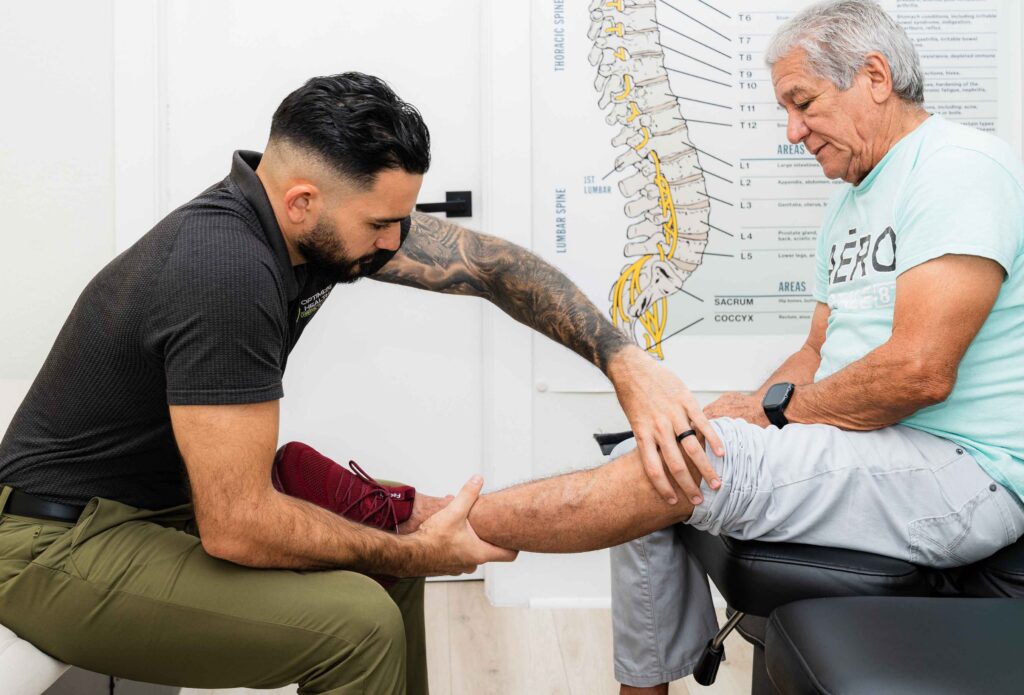
The chiropractic approach to shoulder pain begins with a thorough evaluation. We assess not just your shoulder, but also your neck, upper back, and overall posture. Often, shoulder problems are connected to dysfunction in adjacent areas. For example, restricted movement in your thoracic spine can alter shoulder blade mechanics, contributing to impingement or rotator cuff stress.
Treatment may include gentle joint mobilization or manipulation to restore proper movement to restricted areas. When the joints of your shoulder, shoulder blade, or upper back aren’t moving properly, surrounding muscles have to work harder, leading to strain and pain. Restoring normal joint mechanics can reduce this compensatory stress.
Soft tissue therapy is another important component. Techniques like myofascial release, trigger point therapy, and instrument-assisted soft tissue work can address tight, restricted muscles and fascia that contribute to pain and limited movement. These techniques help improve blood flow, reduce muscle tension, and promote healing.
Evidence suggests that manual therapy combined with therapeutic exercises can be effective for various shoulder conditions, including rotator cuff problems and shoulder impingement. A comprehensive approach that addresses both joint dysfunction and muscle imbalances tends to produce better outcomes than passive treatment alone.
We also provide specific rehabilitation exercises tailored to your condition. These exercises focus on strengthening weak muscles, improving flexibility, and retraining proper movement patterns. The goal is not just to eliminate pain, but to address the underlying issues that caused the problem in the first place.
For patients in Miami Lakes dealing with shoulder pain, chiropractic care offers a drug-free option that addresses the root causes of discomfort rather than simply masking symptoms. By improving joint function, muscle balance, and movement patterns, we help patients return to their normal activities and prevent future problems.
Practical Tips for Protecting Your Shoulders
Preventing shoulder pain is often easier than treating it. These practical strategies can help you maintain healthy shoulders and reduce your risk of injury.
Optimize Your Workspace Ergonomics
Set up your desk so your monitor is at eye level and your keyboard is positioned so your shoulders can relax in a neutral position. Your arms should rest comfortably at your sides with your elbows at about 90 degrees. Avoid reaching forward or hunching your shoulders while typing or using a mouse.
Take Regular Movement Breaks
If you sit for extended periods, set a timer to remind yourself to move every 30 to 45 minutes. Stand up, roll your shoulders back, and perform gentle range-of-motion exercises. Simple movements like shoulder circles, arm reaches, and neck stretches can prevent muscles from becoming stiff and tight.
Practice Proper Lifting Technique
When lifting objects, especially overhead, engage your core and avoid jerking or twisting movements. Keep items close to your body when carrying them. If something feels too heavy, ask for help or use proper equipment. Many shoulder injuries occur during seemingly routine lifting tasks.
Strengthen Your Rotator Cuff and Scapular Muscles
Regular strengthening exercises for the smaller stabilizing muscles of the shoulder can prevent injuries and improve function. Focus on exercises that work the rotator cuff and the muscles that control shoulder blade movement. Resistance bands are excellent tools for these exercises and are gentle on the joints.
Address Posture Throughout the Day
Consciously check your posture multiple times daily. Pull your shoulders back, lift your chest, and imagine a string pulling the top of your head toward the ceiling. Good posture reduces stress on your shoulders and helps maintain proper joint mechanics. If you find yourself constantly slouching, consider ergonomic supports or professional guidance.
Modify Your Sleep Position
If you’re a side sleeper, try sleeping on your unaffected shoulder and hugging a pillow to support your top arm. Avoid sleeping with your arm overhead or pinned beneath your body. Back sleeping with a small pillow under each arm can help keep your shoulders in a neutral position.
Stay Active With Shoulder-Friendly Exercise
Regular physical activity helps maintain shoulder flexibility and strength. Swimming, walking, and resistance training can all support shoulder health when performed with proper form. However, if an activity consistently causes pain, modify it or seek guidance on proper technique.
Listen to Your Body’s Warning Signs
Don’t ignore minor shoulder discomfort hoping it will go away on its own. Early intervention often prevents minor issues from becoming chronic problems. If you notice persistent stiffness, recurring pain, or changes in your shoulder function, address it promptly.
When to See a Chiropractor for Shoulder Pain
Knowing when to seek professional care can make the difference between quick recovery and long-term problems. Consider scheduling an evaluation at Optimize Health Chiropractic Center if you experience any of the following.
Pain that persists for more than a few days despite rest and home care measures suggests an underlying problem that needs professional attention. While minor strains may improve with rest, persistent pain often indicates mechanical dysfunction that won’t resolve on its own.
If your shoulder pain is limiting your daily activities, making it difficult to work, exercise, or perform routine tasks like dressing or reaching, professional evaluation is important. These functional limitations indicate that the problem is affecting your quality of life and needs to be addressed.
Progressive worsening of symptoms is another clear sign to seek care. If your shoulder pain started mild but has been gradually getting worse, or if your range of motion is becoming more restricted over time, early intervention can prevent further deterioration.
Pain that wakes you at night or prevents you from sleeping in your preferred position often indicates significant inflammation or structural irritation. Night pain can be particularly disruptive to your overall health and recovery, making professional treatment important.
If you’ve already tried home remedies like ice, heat, rest, or over-the-counter pain relievers without improvement, it’s time for a more comprehensive approach. Chiropractic care can address the underlying mechanical issues that home care alone cannot fix.
Recurring shoulder pain that goes away temporarily but keeps coming back suggests an underlying pattern of dysfunction. Rather than repeatedly treating flare-ups, a chiropractor can help identify and correct the root cause of the recurring problem.
However, certain red flags warrant immediate medical attention rather than waiting for a chiropractic appointment. Seek emergency care if you experience shoulder pain with chest pain, difficulty breathing, or pain that radiates down your arm accompanied by numbness in your hand. These symptoms could indicate a cardiac event. Similarly, if you’ve experienced significant trauma like a fall or car accident and have severe pain, visible deformity, or inability to move your arm, you should go to an emergency room for evaluation of possible fracture or dislocation.
For residents of Miami Lakes, FL, our team at Optimize Health Chiropractic Center is here to help you determine whether your shoulder pain is appropriate for chiropractic care or if you need referral to another specialist. We take a collaborative approach to healthcare and always prioritize your safety and best interests.
Shoulder Pain Comparison Table
| Type of Pain | Common Causes | Typical Characteristics | When It’s Worse |
|---|---|---|---|
| Sharp, Stabbing | Rotator cuff tendinopathy, impingement, bursitis | Sudden, intense pain with specific movements | Reaching overhead, sleeping on affected side |
| Dull, Aching | Muscle strain, poor posture, chronic overuse | Constant background discomfort | End of workday, prolonged sitting |
| Stiffness | Frozen shoulder, arthritis, joint dysfunction | Limited range of motion in multiple directions | Morning or after inactivity |
| Radiating Pain | Cervical spine issues, nerve impingement | Pain traveling into neck, arm, or shoulder blade | Certain head or neck positions |
| Weakness | Rotator cuff tear, nerve compression, severe tendinopathy | Difficulty lifting arm or objects | Activities requiring arm elevation or strength |
Myths vs. Facts About Shoulder Pain
Myth: Shoulder Pain Always Means a Serious Injury
Fact: While shoulder pain can certainly result from significant injuries, the majority of shoulder pain stems from mechanical dysfunction, muscle imbalances, and postural stress that develop gradually over time. Most cases respond well to conservative care like chiropractic treatment, exercises, and lifestyle modifications. Serious structural damage is actually less common than functional problems.
Myth: Rest Is the Best Treatment for Shoulder Pain
Fact: While avoiding activities that cause sharp pain is wise, complete rest can actually make shoulder problems worse by allowing muscles to weaken and joints to stiffen. Controlled movement, gentle exercises, and gradual return to activity typically produce better outcomes than prolonged rest. The key is finding the right balance between activity and recovery.
Myth: Shoulder Pain Will Eventually Go Away on Its Own
Fact: Some minor shoulder strains may improve without intervention, but many shoulder problems persist or worsen without proper treatment because the underlying mechanical dysfunction remains. Waiting too long to address shoulder pain can allow compensatory patterns to develop, making the problem more complex and harder to resolve. Early intervention typically leads to faster recovery.
Myth: If You Can Still Move Your Shoulder, Nothing Is Seriously Wrong
Fact: You can have significant shoulder problems while still maintaining some degree of movement. Rotator cuff tears, impingement syndrome, and other conditions often allow continued motion despite structural changes. Pain, weakness, and subtle limitations in certain directions can indicate problems that need attention, even if you can still use your shoulder for basic activities.
Myth: Chiropractic Care Is Only for Back and Neck Pain
Fact: While chiropractors are well-known for treating spinal conditions, chiropractic education includes extensive training in extremity problems, including shoulder injuries and dysfunction. Chiropractors are qualified to evaluate, diagnose, and treat shoulder conditions using manual therapy, rehabilitation exercises, and other conservative approaches. Many patients find effective relief for shoulder problems through chiropractic care.
Final Thoughts
Shoulder pain is one of the most common musculoskeletal complaints we see at Optimize Health Chiropractic Center here in Miami Lakes, FL, and for good reason. Your shoulders are constantly working, whether you’re aware of it or not. From typing at your computer to reaching for items on high shelves, your shoulders facilitate countless movements throughout the day. When pain develops, it can affect nearly every aspect of your life.
The good news is that most shoulder pain responds well to conservative care when addressed appropriately. By understanding the different types of shoulder pain and their common causes, you’re already taking an important step toward recovery. Whether your pain stems from everyday strain, postural issues, or a more specific condition, identifying the underlying problem allows for targeted, effective treatment.
If you’re dealing with shoulder discomfort that’s affecting your work, sleep, or daily activities, don’t wait for it to become a chronic problem. Our team is here to help you understand what’s causing your pain and develop a personalized plan to restore function and get you back to the activities you enjoy. Remember, your shoulders are designed for remarkable mobility and function. With the right care and attention, they can serve you well for years to come.
Frequently Asked Questions About Shoulder Pain
How long does shoulder pain typically last?
The duration of shoulder pain varies depending on the cause and severity. Minor strains may improve within a few days to two weeks, while conditions like frozen shoulder can persist for months or longer. With appropriate treatment, most patients see improvement within four to six weeks, though complete resolution may take longer for chronic or complex conditions.
Can poor posture really cause shoulder pain?
Yes, absolutely. Forward head posture and rounded shoulders alter the biomechanics of the shoulder joint, creating muscle imbalances and increasing stress on tendons and other structures. Over time, these postural changes can lead to impingement, rotator cuff problems, and chronic pain. Addressing posture is often a critical component of resolving shoulder issues.
Is it normal for shoulder pain to get worse at night?
Night pain is common with certain shoulder conditions, particularly rotator cuff tendinopathy and bursitis. Lying down can increase pressure on inflamed structures, and reduced movement during sleep may allow inflammation to build. Additionally, sleeping positions can compress the shoulder joint, making symptoms worse. If night pain is significant, professional evaluation is recommended.
What’s the difference between a strained shoulder and a rotator cuff tear?
A shoulder strain involves stretching or minor tearing of muscle fibers and typically heals with rest and conservative care. A rotator cuff tear involves more significant damage to the tendons that attach muscles to bone and may be partial or complete. Tears often cause more severe weakness and functional limitation, though some people with partial tears maintain reasonable function. Professional evaluation can determine the extent of injury.
Can shoulder pain be caused by problems in my neck?
Yes, cervical spine issues frequently refer pain into the shoulder region. Nerve compression, disc problems, and joint dysfunction in the neck can all manifest as shoulder discomfort. This is why chiropractors evaluate the neck and upper back when assessing shoulder pain, as treating the true source of the problem is essential for lasting relief.
Will I need surgery for my shoulder pain?
The vast majority of shoulder problems do not require surgery. Research suggests that conservative care, including chiropractic treatment, physical rehabilitation, and activity modification, effectively manages most shoulder conditions. Surgery is typically considered only when conservative approaches have failed after an appropriate trial period, or in cases of complete tears or significant structural damage that prevents function.
TL;DR: Key Takeaways About Shoulder Pain
- Shoulder pain affects people of all ages and activity levels, often developing from everyday strains, poor posture, and repetitive movements rather than dramatic injuries.
- The shoulder’s complex anatomy prioritizes mobility over stability, making it vulnerable to various types of dysfunction including rotator cuff problems, impingement, bursitis, and referred pain from the neck.
- Most shoulder pain responds well to conservative chiropractic care that addresses joint mechanics, muscle imbalances, and postural issues rather than requiring surgery or medications.
- Preventing shoulder problems involves maintaining good posture, taking movement breaks, strengthening stabilizing muscles, and addressing minor issues early before they become chronic.
- Seek professional evaluation at Optimize Health Chiropractic Center in Miami Lakes, FL, if your shoulder pain persists beyond a few days, limits your activities, disrupts your sleep, or progressively worsens despite home care measures.