
You take the first step out of bed in the morning and feel it—a sharp, shooting pain down your leg. Or maybe it’s a dull ache that’s been lingering for weeks, making it harder to walk, stand, or simply enjoy your day. Leg pain is one of those frustrating conditions that can sneak up on you or strike suddenly, but either way, it can significantly affect your quality of life. Whether you’re navigating the beautiful parks here in Miami Lakes or just trying to keep up with your daily routine, leg pain can make everything feel more challenging. The good news? Understanding what’s causing your discomfort and exploring conservative, non-invasive options like chiropractic care can help you get back on your feet—literally.
What is leg pain, and why does it happen? Leg pain refers to any discomfort, aching, or pain that occurs anywhere from your hips down to your ankles. It can stem from mechanical issues in your spine, muscle imbalances, nerve compression, or problems within the leg itself. Many cases of leg pain are actually related to spinal dysfunction or nerve irritation originating in the lower back, which is where chiropractic care often plays an important role.
Table of Contents
- Understanding Leg Pain: More Than Just a Leg Problem
- Common Causes of Leg Pain
- Signs and Symptoms to Watch For
- How Chiropractic Care Addresses Leg Pain
- Practical Tips for Managing and Preventing Leg Pain
- When to See a Chiropractor for Leg Pain
- Treatment Approaches: A Comparison
- Myths vs. Facts About Leg Pain and Chiropractic Care
- Final Thoughts from Optimize Health Chiropractic Center
Understanding Leg Pain: More Than Just a Leg Problem
When most people experience leg pain, they naturally assume the problem is in the leg itself—maybe a pulled muscle, a cramp, or overexertion. While those are certainly possibilities, many cases of leg pain actually originate somewhere else entirely: the lower back and pelvis. This is because the nerves that supply sensation and movement to your legs exit from your lumbar spine (lower back) and travel down through your hips, thighs, and all the way to your feet.
The sciatic nerve, for example, is the longest and thickest nerve in your body. It runs from your lower spine through your buttocks and down each leg. When this nerve becomes compressed or irritated—a condition commonly known as sciatica—it can cause pain, tingling, numbness, or weakness anywhere along its path. This is why someone with a disc issue in their lower back might feel intense leg pain, even though the source of the problem is in the spine.
Here in Miami Lakes, we see patients every week who’ve been dealing with leg pain for months, trying everything from rest to over-the-counter medications, only to find limited relief. Often, they’re surprised to learn that addressing spinal alignment and nerve function can make a significant difference in their symptoms.
Understanding the connection between your spine and your legs is the first step toward finding effective, lasting relief. Your body is an interconnected system, and dysfunction in one area can absolutely create symptoms in another. That’s where a thorough evaluation becomes so important.
Common Causes of Leg Pain
Leg pain can develop from a variety of sources, and pinpointing the exact cause is essential for determining the right approach to care. Let’s explore some of the most common culprits we see at Optimize Health Chiropractic Center.
Sciatica and Nerve Compression
As mentioned earlier, sciatica is one of the most frequent causes of leg pain. It occurs when the sciatic nerve is compressed or irritated, typically due to a herniated disc, spinal stenosis, or misalignment in the lower back. Patients often describe a burning or shooting pain that travels down the back of the leg, sometimes reaching all the way to the foot. Numbness and tingling are also common.
Lumbar Disc Issues
The discs in your lower back act as shock absorbers between your vertebrae. When a disc bulges, herniates, or degenerates, it can put pressure on nearby nerves that supply your legs. This can result in referred pain, meaning you feel the discomfort in your leg even though the problem is in your spine. Disc-related leg pain often worsens with prolonged sitting, bending, or twisting movements.
Piriformis Syndrome
The piriformis is a small muscle located deep in your buttock. When it becomes tight or spasms, it can compress the sciatic nerve, leading to leg pain that mimics sciatica. This condition is especially common in people who sit for long periods, runners, and those with muscle imbalances in the hips and pelvis.
Sacroiliac Joint Dysfunction
The sacroiliac (SI) joints connect your pelvis to your lower spine. When these joints become misaligned or inflamed, they can cause pain in the lower back, hips, and down the legs. SI joint issues are often overlooked but can be a significant contributor to leg discomfort, especially in active individuals or those with a history of pelvic injuries.
Muscle Strains and Overuse
Sometimes, leg pain is indeed a local issue—a strained hamstring, tight calf muscles, or overworked quadriceps. These types of injuries are common in athletes and weekend warriors here in South Florida who enjoy outdoor activities. While these are typically muscular in nature, they can still benefit from chiropractic care to ensure proper biomechanics and muscle balance.
Postural and Biomechanical Issues
Poor posture, leg length discrepancies, and abnormal gait patterns can all contribute to chronic leg pain. When your body compensates for imbalances, it places uneven stress on your muscles, joints, and nerves. Over time, this can lead to persistent discomfort that seems to have no obvious cause.
Signs and Symptoms to Watch For
Leg pain can manifest in many different ways, and recognizing the specific characteristics of your symptoms can provide important clues about the underlying cause. Here are some of the most common signs and symptoms patients report:
Sharp or shooting pain: This type of pain often travels down the back or side of the leg and suggests nerve involvement, such as sciatica. It may worsen with certain movements like bending, lifting, or coughing.
Dull, aching discomfort: A constant, nagging ache in the leg can indicate muscle strain, joint dysfunction, or chronic nerve irritation. This type of pain may be more noticeable after long periods of standing or walking.
Numbness or tingling: Often described as a “pins and needles” sensation, this symptom is a hallmark of nerve compression. It may come and go or be constant, and it can affect different areas of the leg depending on which nerve is involved.
Muscle weakness: Difficulty lifting your foot, standing on your toes, or climbing stairs can indicate nerve compromise affecting the muscles in your leg. This is a symptom that should be evaluated promptly.
Radiating pain: Pain that starts in your lower back or buttock and travels down your leg is a classic sign of referred pain from spinal or pelvic dysfunction.
Pain that changes with position: If your leg pain improves or worsens depending on whether you’re sitting, standing, or lying down, this can help identify whether the issue is related to nerve compression, muscle tension, or joint dysfunction.
At Optimize Health Chiropractic Center in Miami Lakes, we take the time to listen to your detailed description of symptoms. These details help us understand not just what hurts, but why it hurts, which guides our approach to care.
How Chiropractic Care Addresses Leg Pain
Chiropractic care offers a conservative, non-invasive approach to addressing leg pain, particularly when the pain stems from spinal dysfunction, nerve compression, or biomechanical imbalances. Rather than simply masking symptoms, chiropractors aim to identify and address the underlying cause of your discomfort.
Comprehensive Evaluation
The first step in chiropractic care is a thorough evaluation. At Optimize Health Chiropractic Center, we begin with a detailed discussion of your symptoms, medical history, and lifestyle factors. We then perform orthopedic and neurological tests to assess nerve function, muscle strength, reflexes, and range of motion. We may also evaluate your posture, gait, and spinal alignment to identify any mechanical issues contributing to your leg pain.
Spinal Adjustments
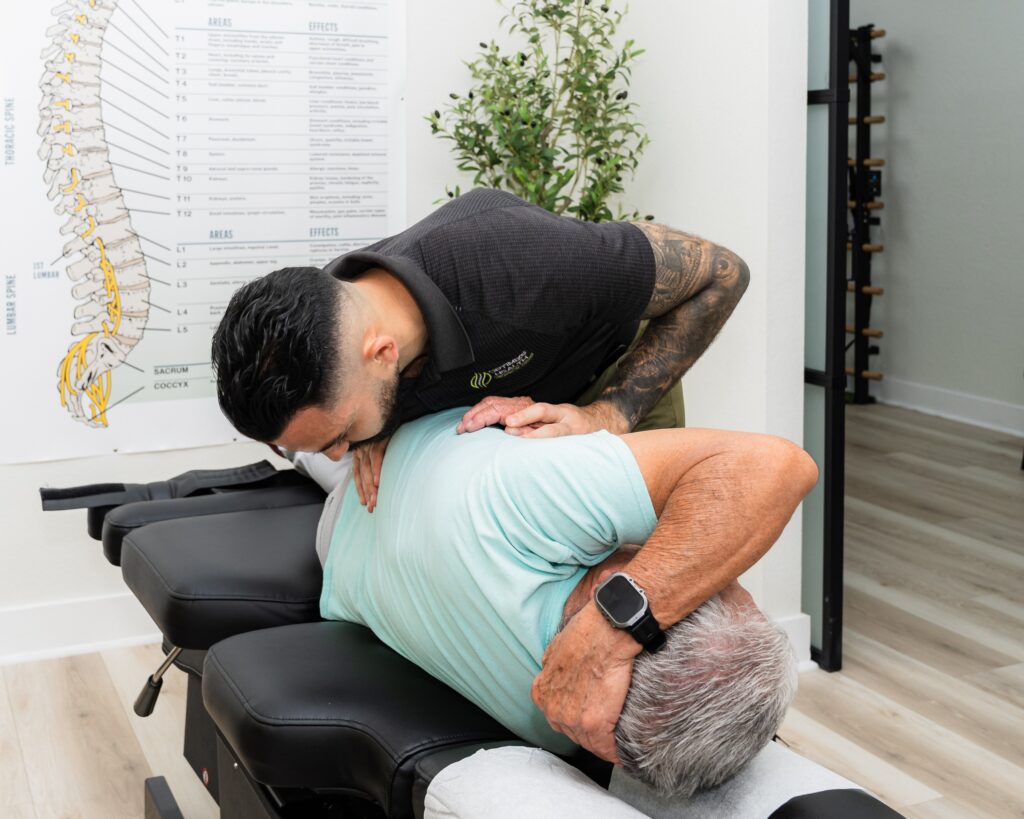
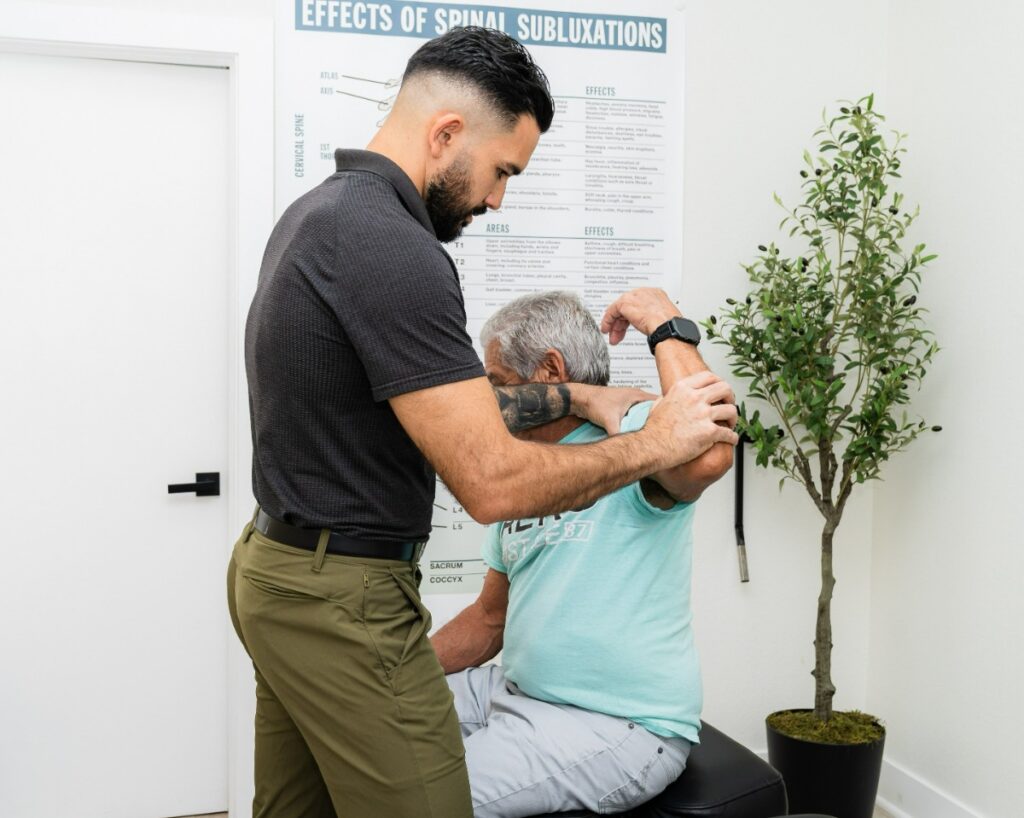
Chiropractic adjustments are gentle, targeted corrections applied to misaligned or restricted joints in the spine and pelvis. When vertebrae in your lower back are out of proper alignment, they can irritate nearby nerves and create tension in surrounding muscles. By restoring normal joint motion and alignment, adjustments can reduce nerve irritation, improve biomechanics, and help alleviate leg pain. Research published in the Journal of Manipulative and Physiological Therapeutics has shown that spinal manipulation can be effective for conditions like sciatica and lower back pain with leg symptoms.
Soft Tissue Therapy
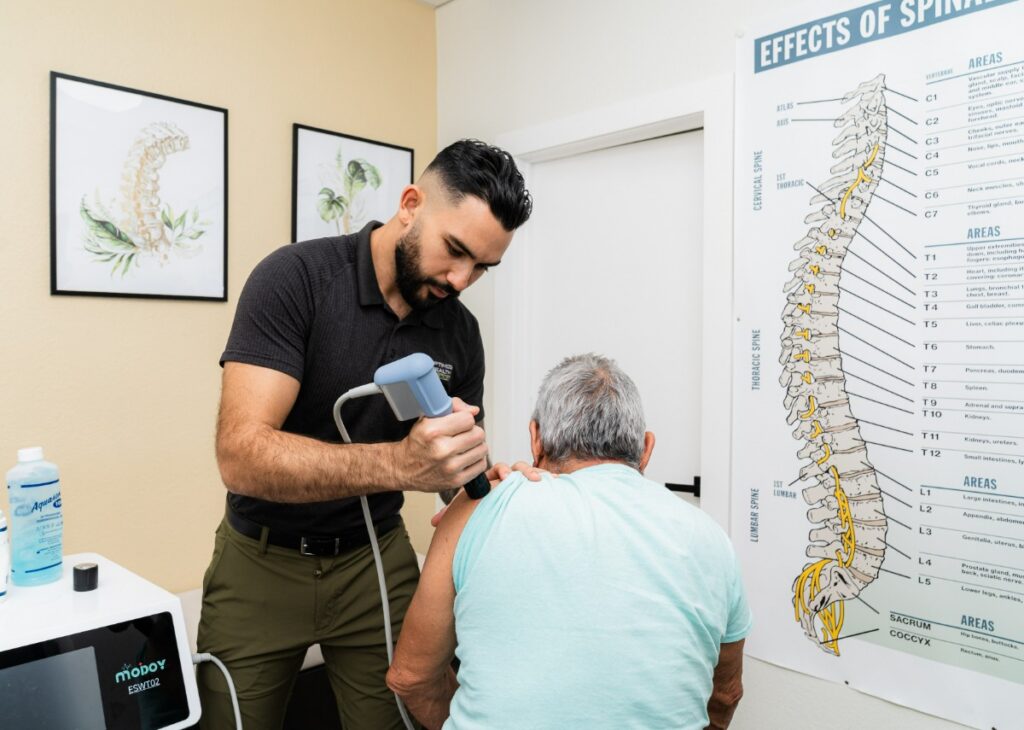
Tight, overworked muscles can contribute to leg pain or develop as a secondary issue due to altered movement patterns. Chiropractors often incorporate soft tissue techniques such as myofascial release, trigger point therapy, or instrument-assisted techniques to address muscle tension, improve blood flow, and promote healing.
Pelvic and Extremity Adjustments
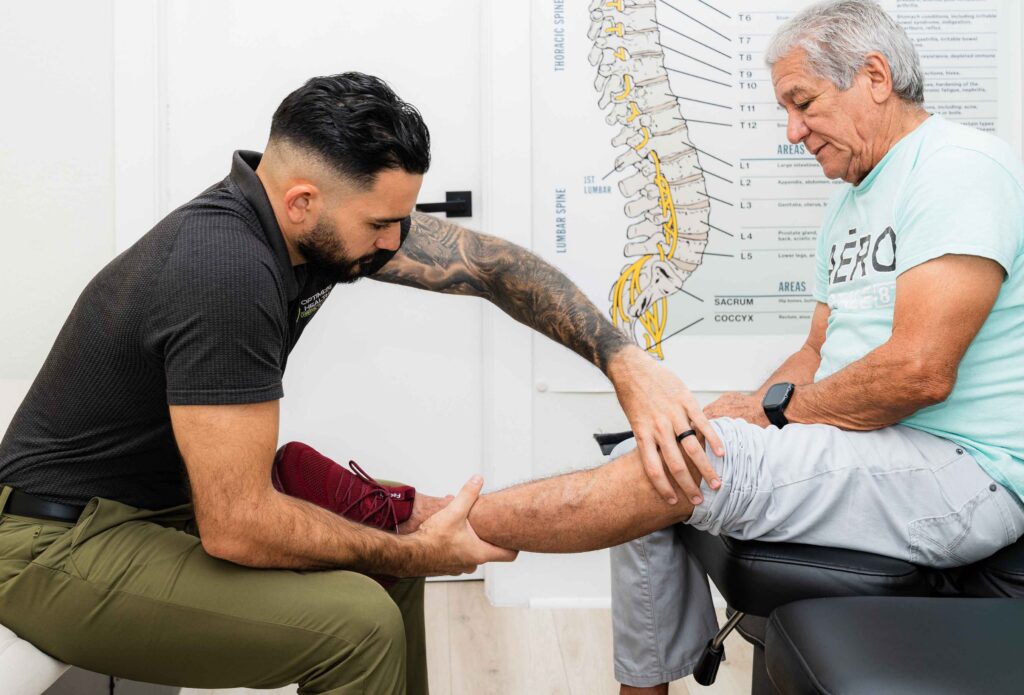
Sometimes, the problem isn’t just in the spine—it’s in the pelvis, hips, or even the knee and ankle joints. Chiropractors are trained to adjust these areas as well, ensuring that your entire kinetic chain is functioning properly. Addressing SI joint dysfunction or hip misalignment can often provide significant relief from leg pain.
Therapeutic Exercise and Rehabilitation
Strengthening weak muscles, improving flexibility, and correcting movement patterns are essential for long-term relief and prevention. Your chiropractor may recommend specific exercises tailored to your condition, such as core stabilization exercises, hip strengthening, or stretches to reduce nerve tension.
Postural and Ergonomic Guidance
Many cases of leg pain are aggravated by poor posture, prolonged sitting, or repetitive movements. Chiropractors provide practical advice on workstation setup, proper lifting techniques, and movement strategies to reduce stress on your spine and legs throughout the day.
At our Miami Lakes practice, we create individualized care plans based on each patient’s unique needs. We understand that no two cases of leg pain are exactly alike, and we’re committed to helping you find relief through safe, evidence-based chiropractic care.
Practical Tips for Managing and Preventing Leg Pain
While professional care is important, there are also several things you can do at home to support your recovery and reduce the risk of future leg pain. Here are some practical, actionable strategies:
Move Regularly
Prolonged sitting is one of the biggest contributors to leg pain, especially sciatica. If you work at a desk, set a timer to remind yourself to stand up and walk around every 30-45 minutes. Even a brief walk can help reduce pressure on your lower back and improve circulation to your legs.
Stretch Daily
Gentle stretching can help maintain flexibility in your hips, hamstrings, and lower back. Focus on stretches like the piriformis stretch, hamstring stretch, and hip flexor stretch. Hold each stretch for 20-30 seconds and avoid bouncing or forcing the movement.
Strengthen Your Core
A strong core provides stability for your spine and reduces the risk of injury. Simple exercises like planks, bridges, and bird dogs can help strengthen your abdominal and back muscles without putting excessive strain on your spine.
Pay Attention to Your Posture
Whether you’re sitting, standing, or walking, good posture matters. Sit with your feet flat on the floor, your back supported, and your shoulders relaxed. Avoid crossing your legs or slumping forward. When standing, distribute your weight evenly on both feet and avoid locking your knees.
Wear Supportive Footwear
Your shoes play a bigger role in leg pain than you might think. Worn-out shoes, high heels, or unsupportive footwear can alter your gait and contribute to imbalances that affect your legs and lower back. Invest in quality shoes with proper arch support, especially if you’re on your feet a lot.
Stay Hydrated
Proper hydration supports muscle function and helps maintain the health of your spinal discs. Aim to drink plenty of water throughout the day, especially in the warm South Florida climate.
Listen to Your Body
Pain is your body’s way of signaling that something isn’t right. Don’t ignore persistent or worsening leg pain. Early intervention often leads to quicker recovery and prevents more serious issues down the road.
When to See a Chiropractor for Leg Pain
Not all leg pain requires immediate professional attention, but there are certain situations where seeking care sooner rather than later is wise. Consider scheduling an evaluation at Optimize Health Chiropractic Center if you experience any of the following:
Pain lasting more than a few days: Occasional muscle soreness after exercise is normal, but leg pain that persists for more than a week without improvement warrants evaluation.
Pain that radiates from your back: If your leg pain is accompanied by lower back discomfort or seems to travel down your leg, it could indicate nerve involvement that would benefit from chiropractic care.
Numbness, tingling, or weakness: These neurological symptoms suggest nerve compression and should be assessed promptly to prevent further complications.
Pain that interferes with daily activities: If leg pain is limiting your ability to work, exercise, or enjoy your daily routine, it’s time to seek help.
Pain after an injury or accident: Even if the pain seems minor at first, injuries can sometimes develop into chronic issues if not addressed properly.
Recurrent episodes: If you’ve experienced leg pain multiple times, especially in the same area, there may be an underlying biomechanical issue that needs to be corrected.
Red Flags That Require Immediate Medical Attention
While chiropractic care is appropriate for most cases of mechanical leg pain, certain symptoms require urgent medical evaluation. Seek immediate medical care if you experience:
- Sudden, severe leg pain accompanied by chest pain, shortness of breath, or dizziness
- Loss of bowel or bladder control
- Progressive weakness or numbness in both legs
- Signs of infection such as fever, redness, or warmth in the leg
- Leg pain following a significant trauma or fall
As chiropractors, we’re trained to recognize when a condition falls outside our scope of practice and will refer you to the appropriate medical specialist when necessary. Your safety and well-being are always our top priority.
Treatment Approaches: A Comparison
| Treatment Approach | How It Works | Best For | Considerations |
|---|---|---|---|
| Chiropractic Care | Spinal adjustments, soft tissue therapy, and rehabilitation to address mechanical dysfunction and nerve compression | Sciatica, disc issues, SI joint dysfunction, biomechanical imbalances | Non-invasive, drug-free, focuses on root cause; requires multiple visits for best results |
| Physical Therapy | Exercise-based rehabilitation, stretching, and strengthening to improve function and reduce pain | Post-surgical recovery, muscle weakness, functional movement issues | Often works well in combination with chiropractic care; may require insurance pre-authorization |
| Medication | Pain relievers and anti-inflammatories to manage symptoms | Short-term symptom relief during acute flare-ups | Does not address underlying cause; potential side effects with long-term use |
| Massage Therapy | Manual manipulation of soft tissues to reduce muscle tension and improve circulation | Muscle-related pain, stress relief, general wellness | Provides temporary relief; most effective when combined with corrective care |
| Surgical Intervention | Removal of herniated disc material or decompression of nerves | Severe nerve compression unresponsive to conservative care, structural abnormalities | Invasive; typically considered after conservative options have been exhausted |
Myths vs. Facts About Leg Pain and Chiropractic Care
There are many misconceptions about leg pain and what chiropractic care can and cannot do. Let’s clear up some of the most common myths we hear at Optimize Health Chiropractic Center in Miami Lakes.
Myth: Leg Pain Always Means There’s a Problem in the Leg
Fact: Many cases of leg pain actually originate from issues in the lower back, pelvis, or spine. Nerve compression or irritation in the lumbar spine can cause referred pain, numbness, or weakness in the legs, even when the leg structures themselves are perfectly healthy.
Myth: Chiropractic Adjustments Are Dangerous for Nerve-Related Leg Pain
Fact: When performed by a licensed, trained chiropractor, spinal adjustments are safe and can be highly effective for nerve-related leg pain. Research supports the use of spinal manipulation for conditions like sciatica, and adverse events are extremely rare.
Myth: You Need Surgery if You Have Sciatica
Fact: The vast majority of sciatica cases improve with conservative care, including chiropractic treatment, physical therapy, and lifestyle modifications. Surgery is typically reserved for severe cases that don’t respond to non-invasive approaches or when there’s significant nerve damage.
Myth: Rest is the Best Treatment for Leg Pain
Fact: While a brief period of rest may be necessary during acute flare-ups, prolonged inactivity can actually worsen leg pain by causing muscle weakness, stiffness, and further biomechanical problems. Gentle movement and appropriate rehabilitation are usually more beneficial than extended rest.
Myth: Chiropractic Care is Only for Back Pain
Fact: Chiropractors are trained to address a wide range of musculoskeletal conditions, including leg pain, hip dysfunction, knee issues, and foot problems. We evaluate and treat the entire kinetic chain, not just the spine.
Final Thoughts from Optimize Health Chiropractic Center
Living with leg pain doesn’t have to be your new normal. Whether your discomfort is sharp and sudden or has been a nagging presence for months, understanding the root cause and exploring conservative care options can make all the difference. Here in Miami Lakes, we’re fortunate to have an active, health-conscious community that values taking care of their bodies naturally.
At Optimize Health Chiropractic Center, we’re committed to helping our neighbors in Miami Lakes and throughout South Florida find relief from leg pain through personalized, evidence-based chiropractic care. We believe in treating the whole person, not just the symptoms, and we take the time to educate our patients so they can make informed decisions about their health.
If you’ve been dealing with leg pain and you’re ready to explore a drug-free, non-surgical approach, we invite you to reach out and schedule an evaluation. Together, we can work toward getting you back to walking tall, moving freely, and enjoying all the activities that make life in South Florida so wonderful. Your journey to better health starts with a single step—let’s take it together.
Frequently Asked Questions
Can a chiropractor help with leg pain that radiates from my lower back?
Yes, chiropractors are specifically trained to address leg pain that originates from the spine, such as sciatica caused by nerve compression. Through spinal adjustments and complementary therapies, chiropractic care can help reduce nerve irritation and improve function. Many patients experience significant relief within a few weeks of beginning treatment.
How long does it take to see improvement in leg pain with chiropractic care?
The timeline varies depending on the cause and severity of your leg pain, as well as how long you’ve been experiencing symptoms. Some patients notice improvement after just a few visits, while others with chronic or more complex issues may require several weeks of care. Your chiropractor will provide a realistic timeline based on your specific condition during your initial evaluation.
Is chiropractic treatment painful when you have leg pain?
Chiropractic adjustments are generally not painful, though you may feel some pressure or hear a popping sound as joints are repositioned. Some patients experience mild soreness after their first few adjustments, similar to post-exercise soreness, but this typically resolves within a day or two. Your chiropractor will always work within your comfort level and adjust techniques as needed.
Do I need an X-ray or MRI before seeing a chiropractor for leg pain?
Not necessarily. Many cases of leg pain can be evaluated and treated based on a thorough physical examination and patient history. If your chiropractor suspects a more serious underlying condition or needs additional information to guide your care plan, they may recommend imaging studies or refer you for further evaluation.
Can chiropractic care prevent leg pain from coming back?
While chiropractic care cannot guarantee that leg pain will never return, addressing underlying biomechanical issues, improving spinal alignment, and following through with recommended exercises and lifestyle modifications can significantly reduce your risk of recurrence. Many patients find that periodic maintenance care helps them stay pain-free long-term.
Will my insurance cover chiropractic care for leg pain?
Many insurance plans do cover chiropractic care, though coverage varies by plan and provider. It’s best to contact your insurance company directly or speak with the staff at Optimize Health Chiropractic Center to verify your specific benefits and coverage details before your first visit.
TL;DR: Key Takeaways
- Leg pain often originates from spinal dysfunction, nerve compression, or biomechanical imbalances rather than issues in the leg itself.
- Common causes include sciatica, herniated discs, piriformis syndrome, SI joint dysfunction, and postural problems.
- Chiropractic care offers a non-invasive, drug-free approach to addressing the root cause of leg pain through spinal adjustments, soft tissue therapy, and rehabilitation.
- Practical self-care strategies like regular movement, stretching, core strengthening, and proper posture can help manage and prevent leg pain.
- Seek professional evaluation if leg pain persists for more than a few days, radiates from your back, involves numbness or weakness, or interferes with daily activities.