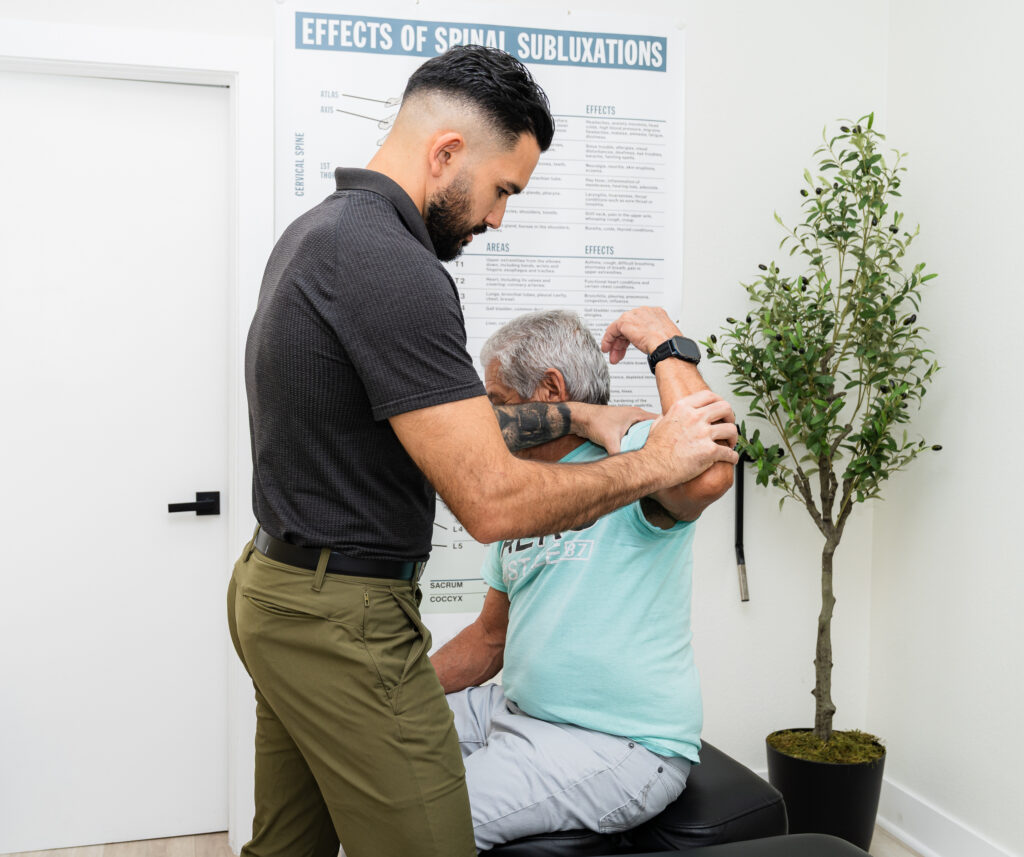

As a local chiropractor, I want to emphasize how much your daily habits can impact your posture. Many people are unaware that simple adjustments in your routine can lead to significant improvements in your overall alignment. By focusing on mindful sitting, strengthening your core muscles, and incorporating regular stretching, you can create a more balanced and resilient body.
Furthermore, optimizing your workspace—whether at home or in an office—and investing in supportive gear can greatly enhance your posture. These strategies not only contribute to your comfort but also promote your overall health and well-being. If you're curious about how to implement these changes effectively, let's take a closer look at each method together. Your journey to better posture starts with understanding how small, mindful changes can make a big difference.
Practice Mindful Sitting
In today's fast-paced world, where many individuals find themselves seated for prolonged periods at desks or in front of screens, practicing mindful sitting can profoundly impact your posture and overall wellness. As a chiropractor, I want to emphasize that mindful sitting goes beyond merely being aware of your sitting position; it involves consciously aligning your body to prevent strain and discomfort.
Begin by examining your chair. Ensure it provides adequate support for your lower back, maintaining the natural alignment of your spine. Sit back fully so that your back makes contact with the chair's backrest. Your feet should rest flat on the floor, with your knees bent at a 90-degree angle. If your feet can't reach the ground, consider using a footrest or a stack of books to elevate them appropriately.
Next, find a comfortable position for your hands—either resting on your lap or at your sides. It's best to avoid crossing your legs, as this can create uneven pressure on your hips and lower back. Keep your shoulders relaxed and down; avoid letting them hunch up towards your ears. Regularly check in with your body throughout your work; be mindful of any tension and make the necessary adjustments to your posture.
Incorporating short breaks into your routine is crucial for maintaining your posture and overall spinal health. Stand up, stretch, or take a brief walk every 30 minutes to give your muscles a chance to refresh and reset.
Additionally, consider practicing deep breathing while you sit. This technique not only enhances your focus but also encourages a more upright and aligned posture.
Strengthen Core Muscles
As a local chiropractor, I want to share with you the importance of strengthening your core muscles for long-term spinal health. While mindful sitting is a great first step towards better posture, having a strong core plays a crucial role in supporting your spine and overall well-being.
Your core encompasses much more than just the muscles you see when you think of a six-pack; it includes the muscles around your abdomen, lower back, and pelvis. A strong core not only helps maintain balance but can also alleviate back pain, a common issue many of my patients face.
To effectively strengthen your core, I recommend incorporating exercises that engage multiple muscle groups. One of my favorites is the plank. This exercise works your entire core and improves stability. Start by holding a plank position for 20-30 seconds. As you build strength, aim to gradually increase the duration.
Another beneficial exercise is the bridge. To perform this, lie on your back with your knees bent and feet flat on the floor. Lift your hips towards the ceiling while squeezing your glutes and engaging your core. Hold this position for a few seconds before lowering back down. The bridge not only strengthens your core but also targets your lower back and glutes, which are essential for maintaining a healthy spine.
Don't forget to include rotational movements in your routine, as they're vital for enhancing your oblique strength. An effective exercise for this is the Russian twist. Sit on the floor, lean back slightly, and lift your feet off the ground. Rotate your torso from side to side, tapping the ground beside you. This movement engages your core while promoting flexibility.
I encourage you to integrate these exercises into your routine at least three times a week. Strengthening your core muscles will provide you with the stability you need for better posture and overall health.
Incorporate Stretching Routines
As a local chiropractor, I want to emphasize the importance of incorporating stretching routines into your daily life for enhanced posture and flexibility. Regular stretching not only alleviates muscle tension but also promotes better alignment, which is crucial for your overall well-being.
I encourage you to dedicate just a few minutes each day to stretches that focus on key muscle groups, including the chest, shoulders, back, and hips.
Let's start with a simple chest stretch. Stand tall with your feet shoulder-width apart and interlace your fingers behind your back. As you gently pull your arms away from your body, lift your chest upward and hold this position for 15-30 seconds. This stretch helps open your chest and counteracts the common rounding of the shoulders that can result from prolonged sitting.
Next, let's incorporate a seated forward bend to effectively stretch your hamstrings and lower back. Sit on the floor with your legs extended straight in front of you. While keeping your back straight, reach towards your toes. Hold this stretch for 15-30 seconds and remember to breathe deeply. This will help release tension in your back and promote flexibility in your legs.
Additionally, it's important to pay attention to your hip flexors, as tightness in this area can lead to discomfort. To stretch them, kneel on one knee with the opposite foot in front, creating a 90-degree angle. Gently push your hips forward while maintaining a straight back, holding for 15-30 seconds on each side. This stretch not only improves flexibility but also supports better alignment in your pelvis.
Incorporating these stretching routines into your daily practice can significantly enhance your posture and overall health.
Optimize Your Workspace
As a chiropractor, I want to emphasize how your workspace can significantly affect your posture and overall well-being. Creating an ergonomic environment is crucial for maintaining a healthy spine and preventing discomfort.
Start by adjusting your chair and desk height to ensure proper alignment; your feet should rest flat on the ground, with your knees positioned at or just below hip level. If your chair doesn't accommodate this, using a footrest can help keep your legs comfortably aligned.
Next, it's important to position your monitor at eye level and about an arm's length away. This will prevent unnecessary strain on your neck and shoulders, which can lead to discomfort over time. If you're using a laptop, consider investing in a stand or an external monitor to achieve the correct height for your screen.
Your keyboard and mouse should be easily accessible, allowing you to use them without leaning forward or stretching your arms excessively.
A clutter-free workspace is also essential for maintaining focus and reducing stress, both of which can negatively impact your posture. Keep your area organized, ensuring that everything you need is within easy reach—this will help you avoid awkward twisting or bending movements.
Lastly, I encourage you to incorporate standing or walking breaks into your daily routine. Setting a timer to remind yourself to stand, stretch, or take a brief walk every hour can have a profound effect on your posture and overall energy levels.
These simple adjustments not only enhance your productivity but also support your spinal health and well-being. Remember, taking care of your body starts with the environment you create around you!
Invest in Supportive Gear
As a local chiropractor, I want to emphasize the importance of investing in supportive gear for your overall health and well-being. Proper support can significantly enhance your posture and comfort, especially if you spend long hours at a desk or are on your feet frequently. The right gear can help align your body, reducing strain on your muscles and joints, which is vital for maintaining a healthy spine.
First and foremost, consider your seating arrangement. A quality ergonomic chair is crucial. Look for one that provides lumbar support to keep your lower back in a natural position. It's essential to choose a chair with adjustable features, allowing you to tailor it to your height and desk setup.
If you work at a computer for extended periods, a chair with armrests can help support your arms, reducing tension in your shoulders and neck.
Don't forget about your footwear! Supportive shoes play a critical role in your posture. Select shoes that offer good arch support and cushioning, especially if you're often on your feet. If you prefer wearing heels, opt for lower and wider styles to minimize stress on your body.
Another great option is to consider a standing desk or a desk converter. This allows you to switch between sitting and standing throughout the day, which can reduce discomfort and promote better posture.
If you opt to stand, anti-fatigue mats can provide additional comfort and support.
Lastly, if you find yourself slouching, posture correctors or braces can be beneficial. These tools can gently remind you to maintain proper posture while you work or move about your day.
Conclusion
As your local chiropractor, I want to emphasize the importance of prioritizing your posture for your overall health and wellness. By implementing these five strategies, you can significantly enhance your well-being.
- Practice Mindful Sitting: Being aware of your sitting posture can prevent unnecessary strain on your spine. Sit tall with your shoulders back and your feet flat on the floor.
- Strengthen Your Core: A strong core supports your spine and promotes better posture. Engage in exercises that target your abdominal and back muscles.
- Incorporate Stretching Routines: Regular stretching can relieve tension in your muscles and improve flexibility. Consider adding stretches that focus on your back, neck, and shoulders.
- Optimize Your Workspace: If you work at a desk, make sure your workspace is ergonomically designed. Adjust your chair, monitor, and keyboard to promote a neutral spine position.
- Invest in Supportive Gear: Consider using tools such as ergonomic chairs, lumbar supports, or even specialized shoes to help maintain proper alignment throughout your day.
Remember, small adjustments can lead to significant improvements in your posture and overall health. By taking the time to care for your posture today, you can enjoy the lasting benefits of a stronger, more aligned body. If you have any questions or need personalized advice, feel free to reach out during your next visit. Your journey to better posture starts here!